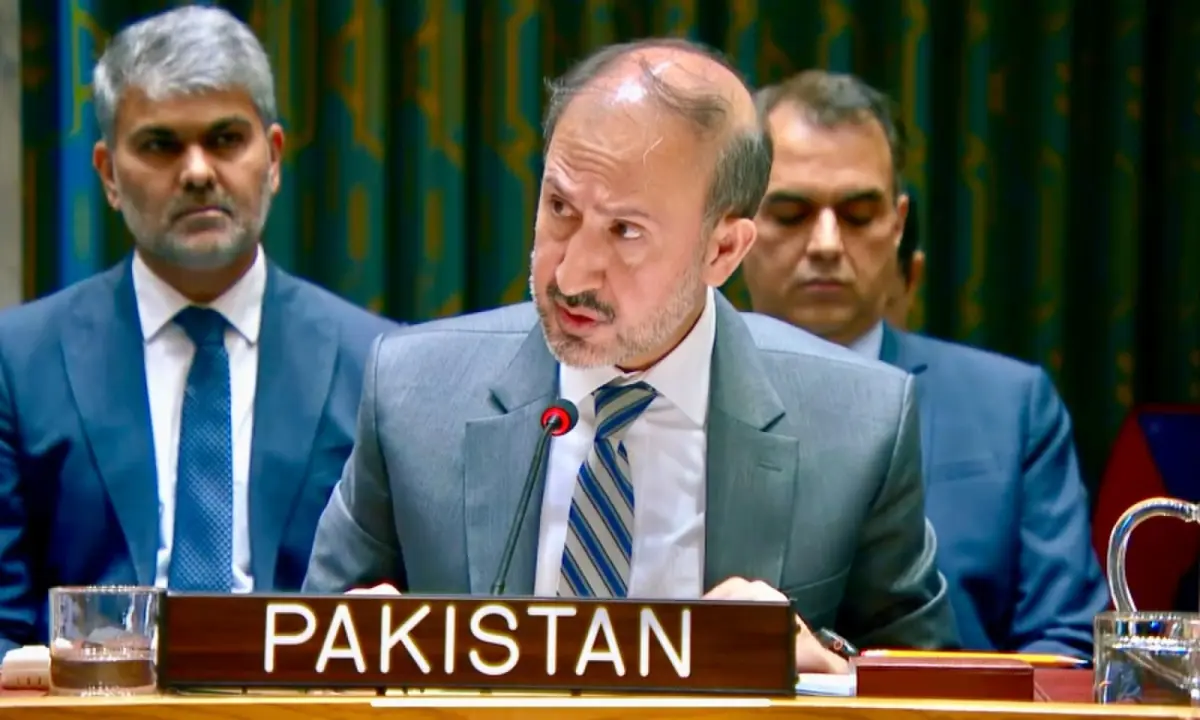
WASHINGTON — Warning that escalating global conflicts threaten critical energy and food supplies, Pakistan told the United Nations Security Council on Monday that supply chain fractures and soaring commodity prices are severely punishing developing economies. Ambassador Syed Haider Shah, Pakistan’s Permanent Representative to the UN, called for the immediate protection of vital maritime routes and energy infrastructure during the high-level security briefing.
“There is little doubt that our world is facing a rapidly shifting and, as a corollary, an unstable geo-political situation,” Ambassador Shah told the council. He stated that regional conflicts are placing tremendous strain on global food and energy networks, restricting access to essential commodities and sending prices soaring far beyond immediate combat zones.
The economic vulnerabilities are compounded by heavy structural reliance on imported fuel, leaving domestic markets exposed to external shocks. According to the International Monetary Fund, 81 percent of the country's fuel imports originate in Gulf Cooperation Council nations, making local petroleum and power sectors acutely sensitive to Middle Eastern disruptions.
The broader economic fallout has already translated into severe macroeconomic pressures over recent quarters. The State Bank of Pakistan reported that consumer price inflation accelerated sharply from March onwards, averaging 10.2 percent during the March-to-June period, driven primarily by elevated global energy costs and regional price premiums.
These external shocks forced authorities to weigh expensive spot-market purchases and alternative fuel arrangements after liquefied natural gas shipments from Qatar faced disruptions. Petroleum Minister Ali Pervaiz Malik noted earlier that spot liquefied natural gas cargoes surged to trade between $20 and $30 per million British thermal units, straining current account balances.





Reader Discussion (0)
MODERATED · NO LINKS OR SPAMLoading reader comments...