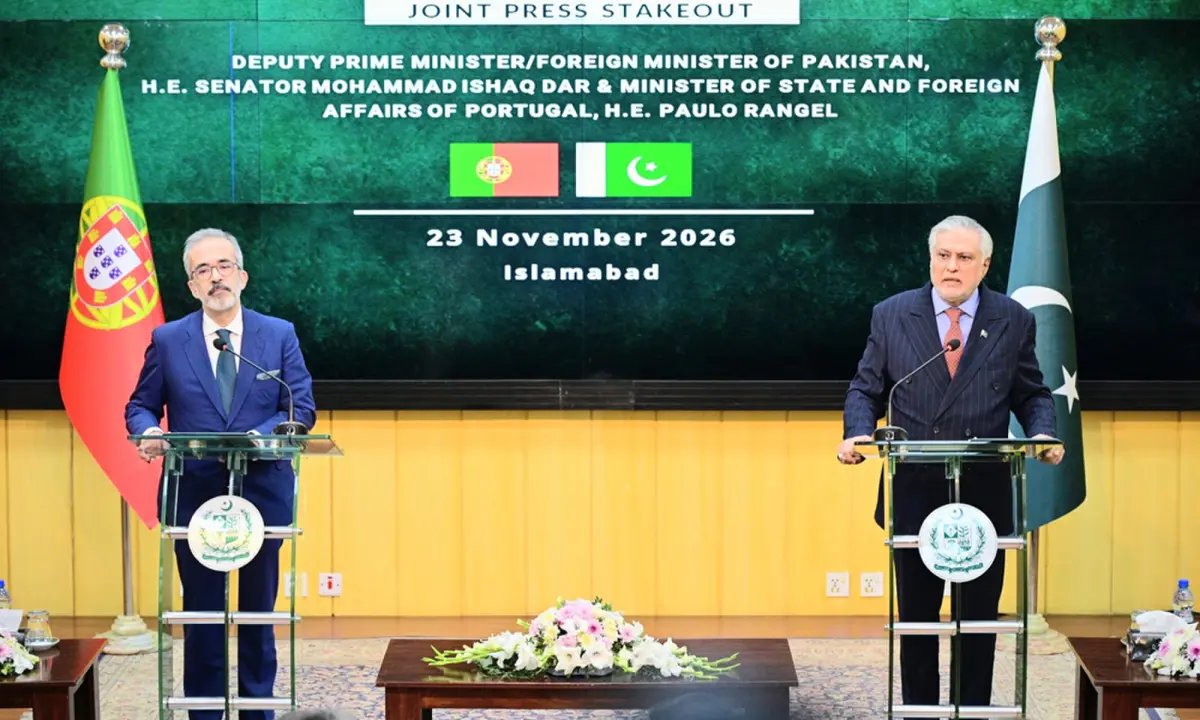
ISLAMABAD — Pakistan and Portugal agreed on Monday to deepen bilateral cooperation in trade, investment, agriculture, renewable energy, technology, and labor mobility during high-level diplomatic talks. Deputy Prime Minister and Foreign Minister Ishaq Dar and Portuguese Minister of State and Foreign Affairs Paulo Rangel convened in the federal capital to expand economic ties as the two nations mark 77 years of diplomatic relations.
The Foreign Office stated that bilateral trade currently remains below its true potential, prompting Islamabad to propose a dedicated Joint Working Group on Trade and Economic Cooperation. Ishaq Dar stated during a joint press stakeout, "Foreign Minister Rangel and I agreed that trade between our two countries falls short of its potential. I proposed a Joint Working Group on Trade and Economic Cooperation to identify barriers to trade and take forward joint initiatives."
The discussions centered heavily on agricultural modernization, specifically leveraging Portugal's expertise in olive cultivation and processing following Pakistan's accession as a permanent member of the International Olive Council in Lisbon on June 30, 2026. Dar formally invited Portuguese enterprises to invest in domestic sectors through the facilitation of the Special Investment Facilitation Council while urging the early conclusion of a formal memorandum of understanding on agricultural cooperation.
The strengthening of diplomatic and commercial channels is expected to open new European markets for Pakistani exporters and facilitate structured labor migration. Both administrations also examined concrete improvements to shipping, logistics, and port-to-port connectivity alongside bilateral frameworks for visa exemptions and investment protection.
While the talks yielded broad consensus on bilateral expansion, concrete implementation depends on the scheduled visit of Portugal's Minister of Agriculture and Maritime Affairs, José Fernandes, and the formal signing of pending pacts. Authorities from both sides must finalize the legal parameters of the proposed working groups to translate diplomatic goodwill into tangible economic outcomes.






Reader Discussion (0)
MODERATED · NO LINKS OR SPAMLoading reader comments...