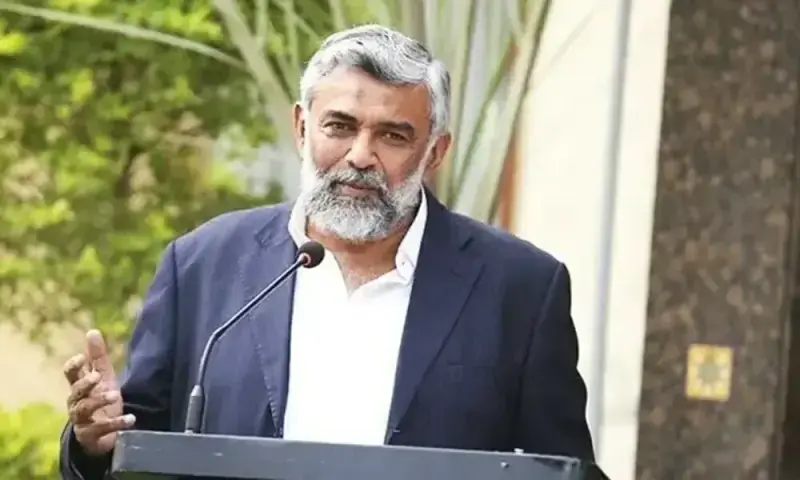
KARACHI / ISLAMABAD — Amid ongoing challenges involving energy insecurity, high import bills, and persistent loadshedding across the nation, political leadership has renewed calls to fully unlock the untapped potential of Sindh's renewable energy assets. Speaking on the matter, Pasban Democratic Party (PDP) Chairman Altaf Shakoor emphasized the urgent necessity of harnessing the Gharo–Jhimpir–Keti Bandar wind corridor to transform the country's power landscape.
The natural corridor boasts a proven capacity to generate over 50,000 megawatts of clean and affordable electricity, a figure that single-handedly exceeds Pakistan's total installed generation capacity from all sources combined, which stands at approximately 49,651 MW for fiscal year 2025-26. Situated merely 90 kilometres from Karachi, the zone is recognized as one of the most consistent wind resource regions, where turbines frequently achieve capacity factors surpassing 30 percent.
Despite these immense advantages, current commercial utilization remains extremely limited. Institutional figures indicate that total installed wind capacity is restricted to roughly 1,838 MW spread across 36 commercial projects. Studies highlight that while the corridor holds an economically viable potential of at least 11 gigawatts, systemic inefficiencies continue to constrain large-scale generation and distribution integration.
A major hurdle identified by stakeholders is the presence of severe transmission bottlenecks. Grid managers routinely curtail up to 1,750 MW of southern wind power, leaving 491.89 gigawatt-hours of renewable energy entirely unutilized within a single year. Addressing these structural limitations could allow Pakistan to replace billions of dollars spent annually on imported re-gasified liquefied natural gas and coal with domestic, indigenous green energy.
Observers note that transforming the wind corridor into the backbone of the national grid requires targeted infrastructure investment and robust political commitment. Expanding transmission lines to transport electricity smoothly from southern wind belts to northern demand centers remains critical to ending reliance on expensive fossil fuels and stabilizing consumer tariffs.