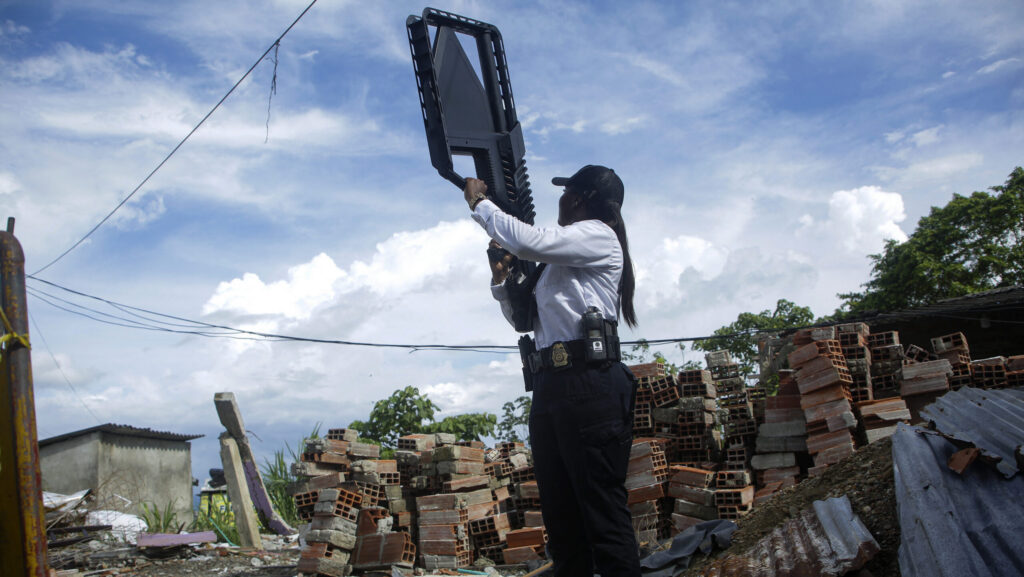
WASHINGTON — Colombian security forces are struggling to counter a rapid escalation in drone-based attacks by militant groups, with at least 11 soldiers killed by explosive-laden systems in the last 100 days. The surge in violence follows a series of high-profile strikes against military installations and infrastructure across the country, forcing the government to accelerate its defensive technological capabilities.
Rebecca Bill Chavez, president of the Inter American Dialogue and former US deputy assistant secretary for defense, noted that these groups have evolved from simple surveillance to launching coordinated, multi-drone offensives. "The explosive-carrying drones are inexpensive, easy to acquire and useful for monitoring security forces and protecting illicit operations," Chavez stated, highlighting the growing sophistication of non-state actors using fiber-optic guidance systems.
The conflict has intensified since August, when President Abelardo de la Espriella initiated a "mano dura" or strong-hand policy against groups including the ELN, FARC, and the Clan del Golfo. According to data from Caracol Radio, the military has recorded 93 separate drone-involved incidents during the president's first 100 days in office, with recent attacks occurring as late as this past Saturday in the Cesar department.
The tactical shift toward unmanned aerial warfare represents a significant challenge for regional stability, as these groups mirror battlefield techniques to bypass traditional security perimeters. For the Colombian armed forces, the immediate priority remains the rapid acquisition of advanced missile, radar, and launch systems to neutralize the threat posed by these low-cost, high-impact weapons currently deployed by criminal networks.
While the government continues to conduct air strikes against identified terrorist organizations, the lack of formal responsibility taken by insurgent groups complicates the security landscape. Authorities are now racing to bridge the technological gap, acknowledging that the current wave of conflict in South and Central America requires a fundamental shift in how military bases and riverine battalions are protected against aerial incursions.







Reader Discussion (0)
MODERATED · NO LINKS OR SPAMLoading reader comments...