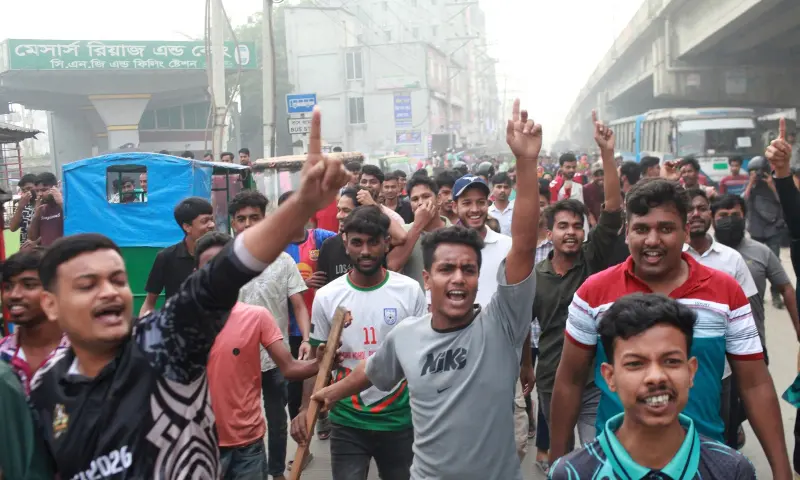
INTERNATIONAL DESK — DHAKA — Bangladeshi security forces deployed tear gas and stun grenades on Tuesday to disperse thousands of garment workers who launched violent street protests following the sudden postponement of a key wage board meeting. Demonstrators blocked the primary highway connecting the capital Dhaka to the financial hub of Mymensingh, setting vehicles ablaze and hurling bricks as frustration boiled over concerning compensation levels.
The South Asian nation of 170 million people stands as the world's second-largest apparel exporter behind China, supplying major global brands such as Levi Strauss and Fruit of the Loom. The vital manufacturing sector generates $38 billion in annual revenues and provides employment for more than four million individuals. Protesters are demanding a minimum monthly salary of 30,000 taka, equivalent to $240, representing a 140-per-cent hike from the current baseline of 12,500 taka to combat soaring food, housing, transport, and healthcare expenses.
Unrest across the manufacturing hubs of Savar, Ashulia, and the outskirts of Dhaka has escalated since October, leading to the closure of approximately 500 out of 4,500 factories. Industry operators have utilized the labour law's 'no work, no pay' provision to suspend operations and withhold earnings during production disruptions, further intensifying grievances. Workers voiced deep skepticism that the government-established wage board, which includes employer and employee representatives, will adequately address their financial demands.
While the newly revised minimum wage is scheduled for announcement in December ahead of a January implementation, factory owners and manufacturing associations have urged an immediate return to negotiations. As officials continues to monitor the situation, labourers on the ground maintain that their ongoing demonstrations will persist until transparent and meaningful pay adjustments are officially confirmed.