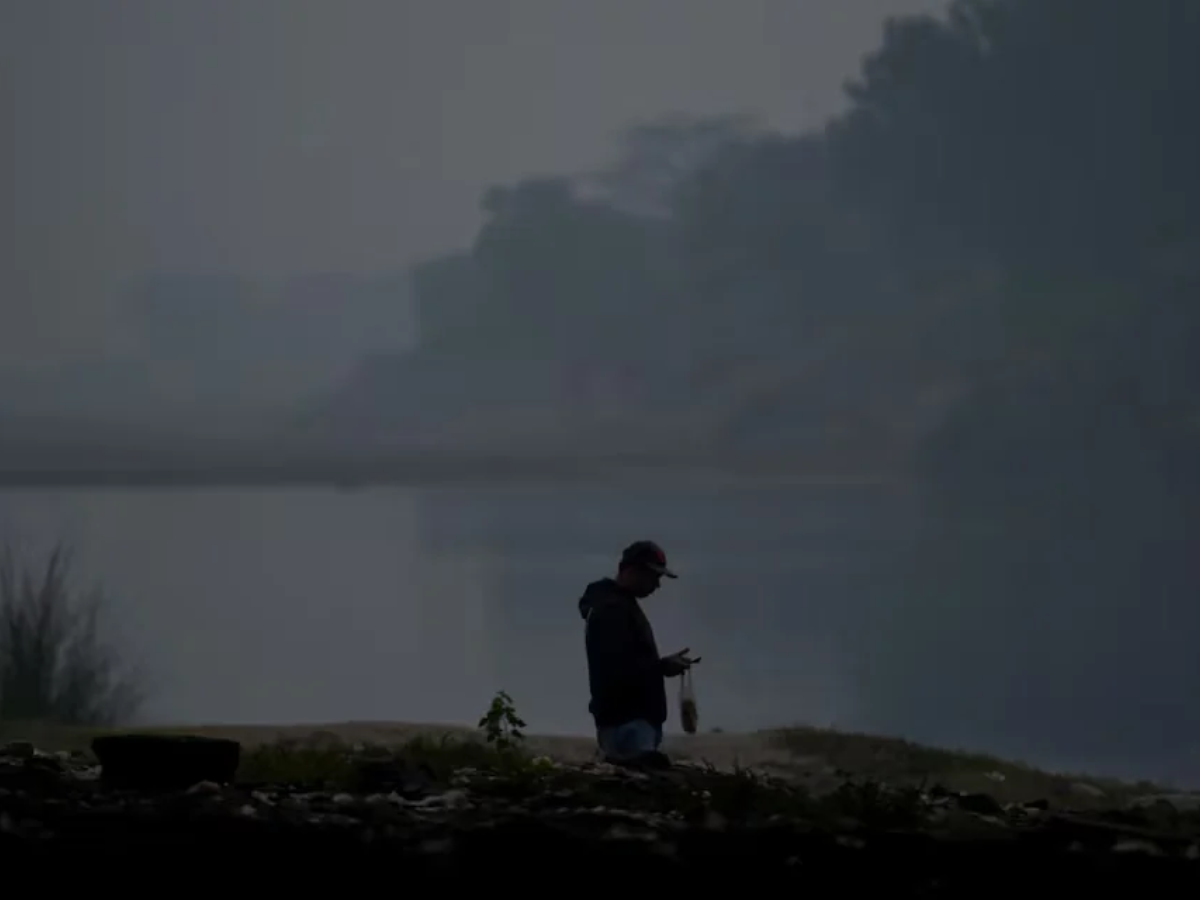
Punjab Deploys Special Rapid-Response Force to Curb Stubble Burning and Toxic Smog

Authorities in Punjab have rolled out a specialized 750-member environmental enforcement unit to extinguish illegal crop residue fires and combat the province's hazardous winter air pollution.

Share:WhatsAppX / PostFacebookLinkedIn
اردو خلاصہ · Urdu (RTL) Edition Hook
Punjab Deploys Special Rapid-Response Force to Curb Stubble Burning and Toxic Smog — Newsbeat pakistan coverage
NEWSBEAT · pakistanVERIFIED EDITION
Punjab Deploys Special Rapid-Response Force to Curb Stubble Burning and Toxic Smog — Newsbeat Pakistan Desk
Key Takeaways
  • Punjab has established a 750-member environmental force across 67 rapid-response units in major rice-growing districts to tackle illegal stubble burning.
  • Violators face fines of 15,000 Pakistani rupees per acre, potential prosecution, and up to six months in jail.
  • The government has distributed over 10,000 subsidized super seeders, covering 60% of their cost to encourage alternative crop clearing methods.

ISLAMABAD / LAHORE — Provincial authorities in Punjab have activated a novel rapid-response enforcement mechanism on the outskirts of Lahore, deploying specialized units designed to intercept and extinguish illegal agricultural residue fires before they can exacerbate the region's severe winter air pollution crisis. As plunging temperatures trap a toxic mix of industrial emissions, vehicle exhaust, and construction dust under stagnant cold air, the newly deployed crews are racing against time to suppress paddy stubble burning that traditionally peaks following the October harvest.

The intervention forms part of a broader administrative crackdown managed by the Punjab Environment Protection and Climate Change Department, which has mobilized a 750-member force organized into 67 distinct rapid-response units across key agricultural districts. According to departmental officials, these teams are mandated to arrive at reported field fires within a 10-to-15-minute window. Operational statistics highlight the scale of the ongoing enforcement drive: in a single 24-hour period this week, monitoring channels logged 679 stubble-burning incidents across the province, with response crews successfully dousing 650 of the reported blazes.

To enforce compliance, the administration has adopted a strict carrot-and-stick approach combining penal measures with technological incentives. Farmers caught burning leftover crop residue face financial penalties set at 15,000 Pakistani rupees per acre, alongside the risk of formal prosecution and prison sentences of up to six months for non-payment. Simultaneously, the agricultural directorate has subsidized the distribution of more than 10,000 advanced super seeders, absorbing 60% of the machinery's cost while requiring growers to cover the remaining 40%. While some agrarian stakeholders report significant yield improvements after transitioning to these subsidized alternatives, many operators continue to utilize traditional burning methods due to their speed and minimal immediate expense.

Despite official claims that satellite data indicates a reduction in burned acreage compared to historical averages, the public health toll remains stark as hospitals across Lahore report an influx of patients suffering from respiratory ailments, throat infections, and aggravated cardiovascular conditions. Environmental regulators maintain that inter-provincial and cross-border coordination remains vital, noting that the immense challenge of regional haze has been formally raised at international forums. Meanwhile, local enforcement units continue their round-the-clock patrols and multi-channel complaint monitoring to keep emissions in check as the winter smog season deepens.

Key Questions & Context

NEWSBEAT BRIEFING
Q: What is the core development in this report?

Authorities in Punjab have rolled out a specialized 750-member environmental enforcement unit to extinguish illegal crop residue fires and combat the province's hazardous winter air pollution.

Q: What are the key details and background context?

The intervention forms part of a broader administrative crackdown managed by the Punjab Environment Protection and Climate Change Department, which has mobilized a 750-member force organized into 67 distinct rapid-response units across key agricultural districts. According to departmental officials, these teams are mandated to arrive at reported field fires within a 10-to-15-minute window. Operational statistics highlight the scale of the ongoing enforcement drive: in a single 24-hour period this week, monitoring channels logged 679 stubble-burning incidents across the province, with response crews successfully dousing 650 of the reported blazes.

Q: Why does this matter for readers following Pakistan?

Despite official claims that satellite data indicates a reduction in burned acreage compared to historical averages, the public health toll remains stark as hospitals across Lahore report an influx of patients suffering from respiratory ailments, throat infections, and aggravated cardiovascular conditions. Environmental regulators maintain that inter-provincial and cross-border coordination remains vital, noting that the immense challenge of regional haze has been formally raised at international forums. Meanwhile, local enforcement units continue their round-the-clock patrols and multi-channel complaint monitoring to keep emissions in check as the winter smog season deepens.

Punjab Deploys Special Rapid-Response Force to Curb Stubble Burning and Toxic Smog | Newsbeat.pk