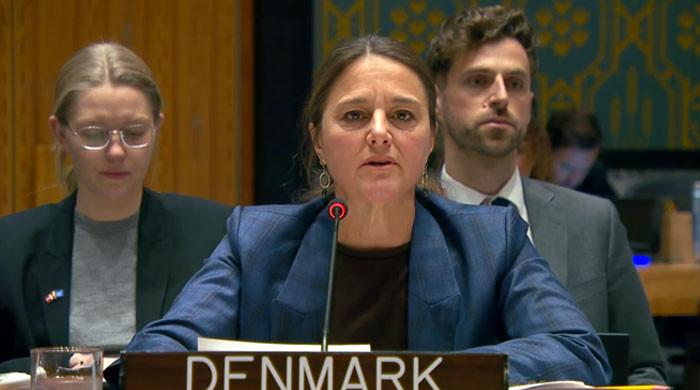
ISLAMABAD — The chair of the United Nations Security Council's Daesh and Al-Qaeda Sanctions Committee has cautioned that the banned Tehreek-e-Taliban Pakistan (TTP) poses a serious and growing threat to the region, noting that the group has carried out multiple high-profile attacks in Pakistan from Afghan territory, some resulting in mass casualties. Presenting a report to the Security Council, Denmark’s Deputy Permanent Representative Sandra Jensen Landi said that the TTP — comprising roughly 6,000 fighters — remains a major regional danger, benefiting from both logistical and significant support from the “de facto” Afghan authorities.
She said that the TTP, with its approximately 6,000 fighters, is a serious threat emanating from the region, receiving both logistical and substantial support from the "de facto" authorities. Landi made that statement as the 15-member Council was briefed by the heads of three of its subsidiary bodies — which relate to Daesh/Al-Qaeda, UN counter-terrorism efforts and measures to prevent the proliferation of weapons of mass destruction to non-State actors — hearing that the threat posed by terrorism continues to evolve, especially in Africa, as malign actors exploit new technologies to pursue dangerous ends. Islamabad and Kabul are witnessing heightened tensions amid the Afghan Taliban regime's reluctance to act against terrorist groups operating from its soil, in the backdrop of rising terror attacks in Pakistan.
Commenting on the report, Pakistan's Deputy Permanent Representative to the UN, Usman Jadoon, said the country has rendered invaluable sacrifices in its efforts to eradicate this menace, with over 80,000 casualties and billions of dollars in economic losses. Al-Qaeda, he added, was decimated largely due to Pakistan's efforts. “Our valiant security forces and law enforcement agencies continue to counter the terrorism threat emanating from Afghanistan where entities like ISIL-K, TTP and its affiliates, BLA (Balochistan Liberation Army) and its Majeed Brigade are thriving under the patronage of their hosts and backed by our principle adversary and net destabiliser in the region," he said, without naming India.